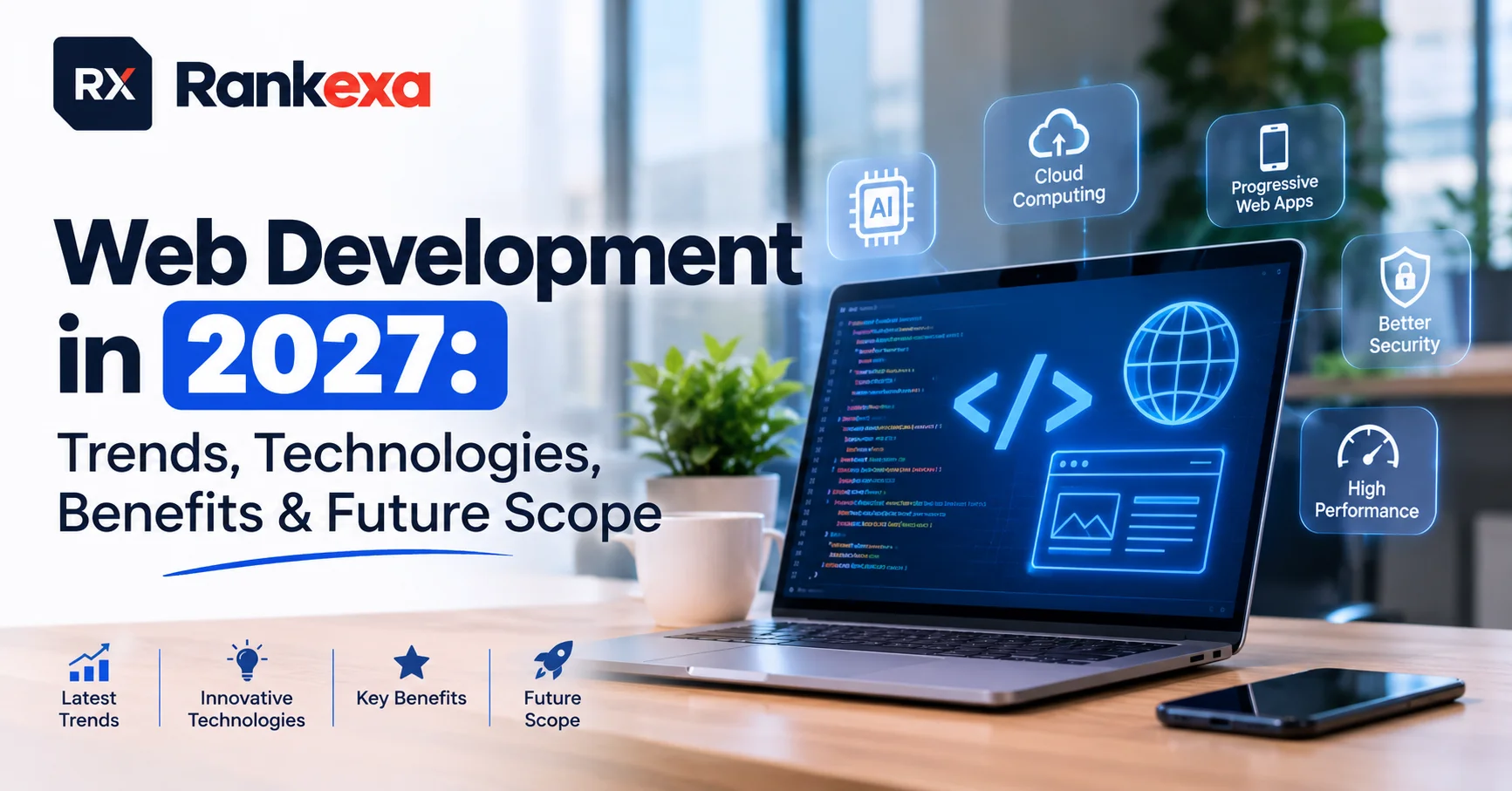
Web development is evolving rapidly as businesses adopt artificial intelligence, automation, cloud computing, and modern digital technologies. In 2027, websites will become more intelligent, interactive, secure, and personalized, helping businesses deliver better customer experiences and improve operational efficiency. From AI-powered web applications to progressive web apps and cloud-native architecture, emerging innovations are changing how websites are designed, developed, and managed.
Businesses now need more than attractive website designs; they require scalable, mobile-friendly, high-performing, and search-engine-friendly digital platforms. Understanding the latest web development trends, technologies, and benefits can help organizations make informed technology decisions. Whether you are a startup, established company, or entrepreneur, investing in modern web development can strengthen your online presence and support long-term business growth.
What Is Web Development and Why Is It Important in 2027?
Web development refers to the process of creating, building, and maintaining websites and web applications that operate through internet browsers. It includes frontend development, backend programming, database management, security, and website optimization. In 2027, modern web development will play an important role in helping businesses establish digital identities, reach customers, automate operations, and provide seamless online experiences across different devices.
Why Modern Web Development Matters for Businesses
- Stronger Digital Presence: A professionally developed website helps businesses showcase their services, communicate their brand value, and reach potential customers online.
- Better Customer Experience: Responsive layouts, simple navigation, and interactive features make it easier for visitors to find information and complete actions.
- Business Automation: Websites and web applications can automate bookings, customer inquiries, payments, and other repetitive business processes.
- Long-Term Scalability: Modern website architecture allows businesses to introduce new features, manage increasing traffic, and expand their digital services as requirements change.
Top Web Development Trends in 2027
Web development trends in 2027 are expected to focus on intelligent automation, improved performance, personalization, security, and accessibility. Businesses are increasingly exploring technologies that make websites faster, more useful, and easier to manage. Understanding these developments can help organizations select appropriate solutions, improve customer engagement, and prepare their digital platforms for changing user expectations.
Emerging Web Development Trends to Watch
- AI-Powered Web Development: Artificial intelligence is helping developers generate code, identify errors, automate testing, and create personalized website experiences. AI chatbots can also support customers by answering common questions.
- Progressive Web Apps (PWAs): PWAs combine useful website features with app-like experiences, including offline access, push notifications, and faster loading on supported devices.
- Headless CMS and API-First Development: These approaches separate content management from the presentation layer, allowing businesses to deliver content across websites, mobile applications, and other digital platforms.
- Cloud-Native and Serverless Development: Cloud infrastructure and serverless services help applications handle changing workloads while reducing the need to manage traditional server infrastructure.
Latest Web Development Technologies and Frameworks in 2027
Choosing the right web development Services trends technologies is essential for building reliable and scalable digital products. Frontend frameworks control how users interact with websites, while backend technologies manage application logic, databases, and server communication. Businesses should select their technology stack according to project complexity, development expertise, performance requirements, security needs, and future maintenance plans.
Popular Technologies Used in Modern Web Development
- Frontend Technologies: HTML5, CSS3, JavaScript, React.js, Angular, Vue.js, and Next.js help developers create responsive, interactive, and user-friendly website interfaces.
- Backend Technologies: Node.js, Python, PHP, Laravel, Java, and .NET support server-side programming, business logic, authentication, and application functionality.
- Database Technologies: MySQL, PostgreSQL, MongoDB, and Firebase help applications store, organize, retrieve, and manage information efficiently.
- Cloud and Development Tools: AWS, Microsoft Azure, Google Cloud, GitHub, Docker, and CI/CD tools support deployment, collaboration, application hosting, and development automation.
| Technology | Main purpose | Common use case |
| React.js | Frontend development | Interactive websites |
| Next.js | Full-stack web framework | SEO-friendly web applications |
| Node.js | Backend development | APIs and real-time applications |
| Python | Backend programming | AI-powered web applications |
| Laravel | PHP framework | Business websites and portals |
| MongoDB | Database management | Flexible data-driven applications |
| AWS | Cloud infrastructure | Scalable web hosting |
Benefits of Modern Web Development for Businesses
Modern web development services provides businesses with digital tools that support customer communication, marketing, sales, and everyday operations. A well-planned website can improve brand credibility while making products and services accessible to a wider audience. By combining responsive design, reliable infrastructure, and useful functionality, organizations can build digital platforms that support measurable business objectives.
Key Business Benefits of Web Development
- Improved User Experience: Fast loading, accessible layouts, and intuitive navigation help visitors interact with websites more comfortably.
- Increased Customer Engagement: Contact forms, live chat, personalized content, and interactive features encourage visitors to explore services and connect with businesses.
- Better Business Efficiency: Automated workflows, online payments, appointment systems, and customer portals reduce manual tasks and save time.
- Greater Scalability: Flexible architecture makes it easier to add products, integrate third-party tools, and support business expansion without rebuilding the entire platform.
Custom Web Development vs Traditional Web Development: Which Is Better?
Businesses can choose between custom web development and traditional website-building approaches depending on their requirements. Traditional solutions often use ready-made templates, themes, or website builders, making them suitable for straightforward projects. Custom development involves building functionality around specific business needs. Understanding their differences helps organizations balance development costs, flexibility, performance, and long-term requirements.
Choosing the Right Website Development Approach
- Custom Web Development: Provides tailored features, unique designs, specialized integrations, and greater control over application functionality.
- Traditional Website Development: Uses existing templates or platforms to create websites with comparatively simple requirements and shorter development timelines.
- Customization and Scalability: Custom solutions generally offer more flexibility for complex workflows, while traditional solutions may require platform-specific adjustments.
- Budget and Maintenance: Template-based websites can have lower initial costs, whereas custom projects may require higher investment and dedicated maintenance.
How Much Does Web Development Cost in 2027?
Web development costs in 2027 will depend on website complexity, design requirements, technology choices, integrations, security, and development time. A simple informational website generally requires fewer resources than a custom e-commerce platform or enterprise web application. Businesses should evaluate both initial development expenses and ongoing hosting, maintenance, updates, and security costs before finalizing their budgets.
Major Factors Affecting Website Development Costs
- Website Type and Complexity: Business websites, online stores, booking platforms, and enterprise applications have different functionality and development requirements.
- Design and User Experience: Custom layouts, animations, accessibility features, and responsive interfaces can increase design and development effort.
- Features and Integrations: Payment gateways, CRM systems, APIs, user dashboards, and AI-powered features influence project scope and costs.
- Maintenance and Hosting: Domain registration, cloud hosting, backups, security monitoring, technical support, and regular updates contribute to long-term expenses.
How to Choose the Right Web Development Company for Your Business?
Selecting the right web development company is essential for building a high-performing, secure, and scalable website. Businesses should evaluate technical expertise, communication, previous projects, and ongoing support before choosing a development partner. A reliable team like Rankexa understands business objectives and recommends suitable technologies to achieve measurable results. By focusing on quality, performance, and long-term growth, Rankexa helps businesses create effective web solutions that support their digital success.
Important Factors to Consider Before Hiring
- Technical Experience: Review the company's experience with relevant programming languages, frameworks, databases, and web development technologies.
- Portfolio and Client Reviews: Examine previous projects, website functionality, design quality, and genuine customer feedback to evaluate development capabilities.
- Development Process: Understand how the company manages planning, UI/UX design, coding, testing, deployment, and project communication.
- Support and Scalability: Confirm whether the company provides website maintenance, security updates, performance monitoring, and future feature development.
Conclusion
Web development in 2027 will create new opportunities for businesses through artificial intelligence, modern frameworks, cloud technologies, and intelligent applications. Organizations should focus on responsive design, website security, scalability, performance, and user experience when planning digital projects. Choosing the right technologies and an experienced development partner can support long-term growth.
Businesses should also implement SEO, AEO, and GEO strategies to improve online visibility. If you are planning to build or upgrade your website, Get in Touch with experienced web development professionals to discuss your requirements and create reliable digital solutions that deliver lasting business value.
Frequently Asked Questions
Q1. What are the biggest web development trends in 2027?
Ans. The major web development trends expected in 2027 include AI-powered development, agentic AI, progressive web applications, headless CMS, cloud-native architecture, edge computing, and advanced cybersecurity. These developments aim to improve website performance, automation, scalability, and user experiences. Businesses should adopt technologies according to their objectives and customer requirements rather than following every emerging trend.
Q2. Which web development technologies are most popular in 2027?
Ans. Popular web development technologies include HTML, CSS, JavaScript, React.js, Next.js, Angular, Vue.js, Node.js, Python, PHP, and Laravel. Developers also use databases such as MySQL, PostgreSQL, and MongoDB. Cloud platforms like AWS, Azure, and Google Cloud support hosting and application infrastructure. The right technology depends on project complexity, performance expectations, and available expertise.
Q3. How is AI changing the future of web development?
Ans. Artificial intelligence is transforming web development through automated coding assistance, intelligent testing, error detection, personalized experiences, and customer support chatbots. AI-powered tools can help developers complete repetitive tasks more efficiently. However, human expertise remains important for architecture, security, quality assurance, and decision-making. Combining AI capabilities with professional development practices can improve application quality and productivity.
Q4. What are the benefits of modern web development for businesses?
Ans. Modern web development helps businesses establish a professional online presence, improve customer experiences, automate operations, and reach wider audiences. Responsive designs make websites accessible across different devices, while scalable architecture supports future growth. Additional benefits include improved customer engagement, easier service management, better integrations, and opportunities to increase online inquiries, leads, and sales.
Q5. Which programming language is best for web development in 2027?
Ans. There is no single best programming language for every web development project. JavaScript and TypeScript are widely used for frontend and full-stack development, while Python, PHP, Java, and C# support different backend requirements. Developers should select a language based on project functionality, scalability, security, available frameworks, and team expertise rather than popularity alone.
Q6. How much does it cost to develop a website in 2027?
Ans. Website development costs in 2027 will depend on design complexity, functionality, technology stack, integrations, and maintenance requirements. A basic business website generally costs less than a custom e-commerce platform or enterprise application. Businesses should consider hosting, domain registration, security, and ongoing support when preparing budgets. Requesting a detailed project estimate helps avoid unexpected expenses.
Q7. Is web development a good career choice for the future?
Ans. Web development can be a promising career choice because businesses continue to need websites, digital platforms, and web applications. Skills in JavaScript, React, backend programming, cloud computing, cybersecurity, and AI integration can improve career opportunities. Developers should continuously learn new technologies, build practical projects, and understand user requirements to remain competitive in the evolving technology industry.
Q8. How can businesses make their websites AI-ready and GEO-friendly?
Ans. Businesses can prepare websites for AI-driven search by publishing original, accurate, and well-structured content. Use descriptive headings, direct answers, relevant examples, credible references, and consistent brand information. Maintain strong technical SEO, mobile usability, and crawlability. Add appropriate structured data where relevant and regularly review content quality. These practices improve understanding and discoverability without guaranteeing AI citations.